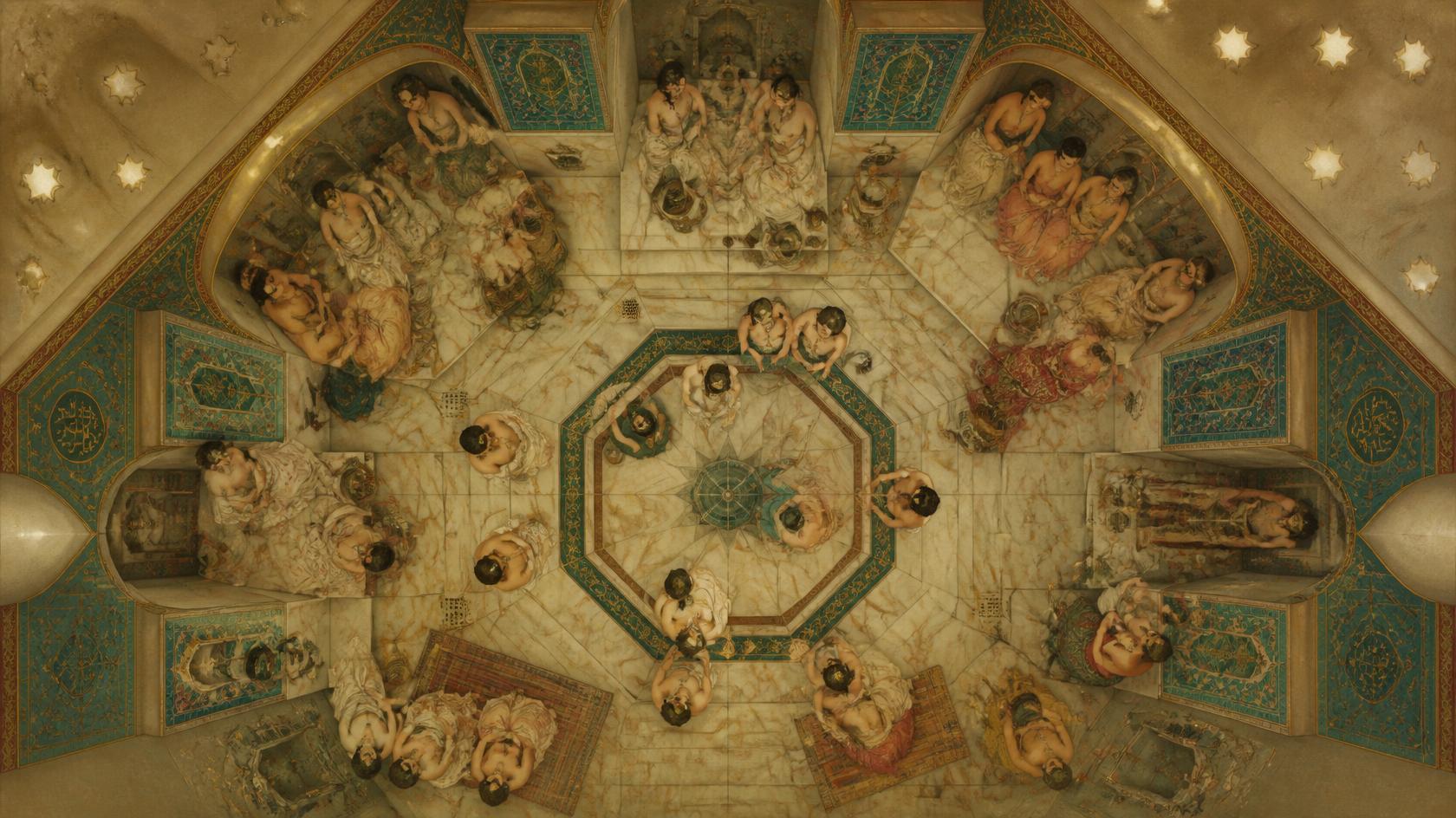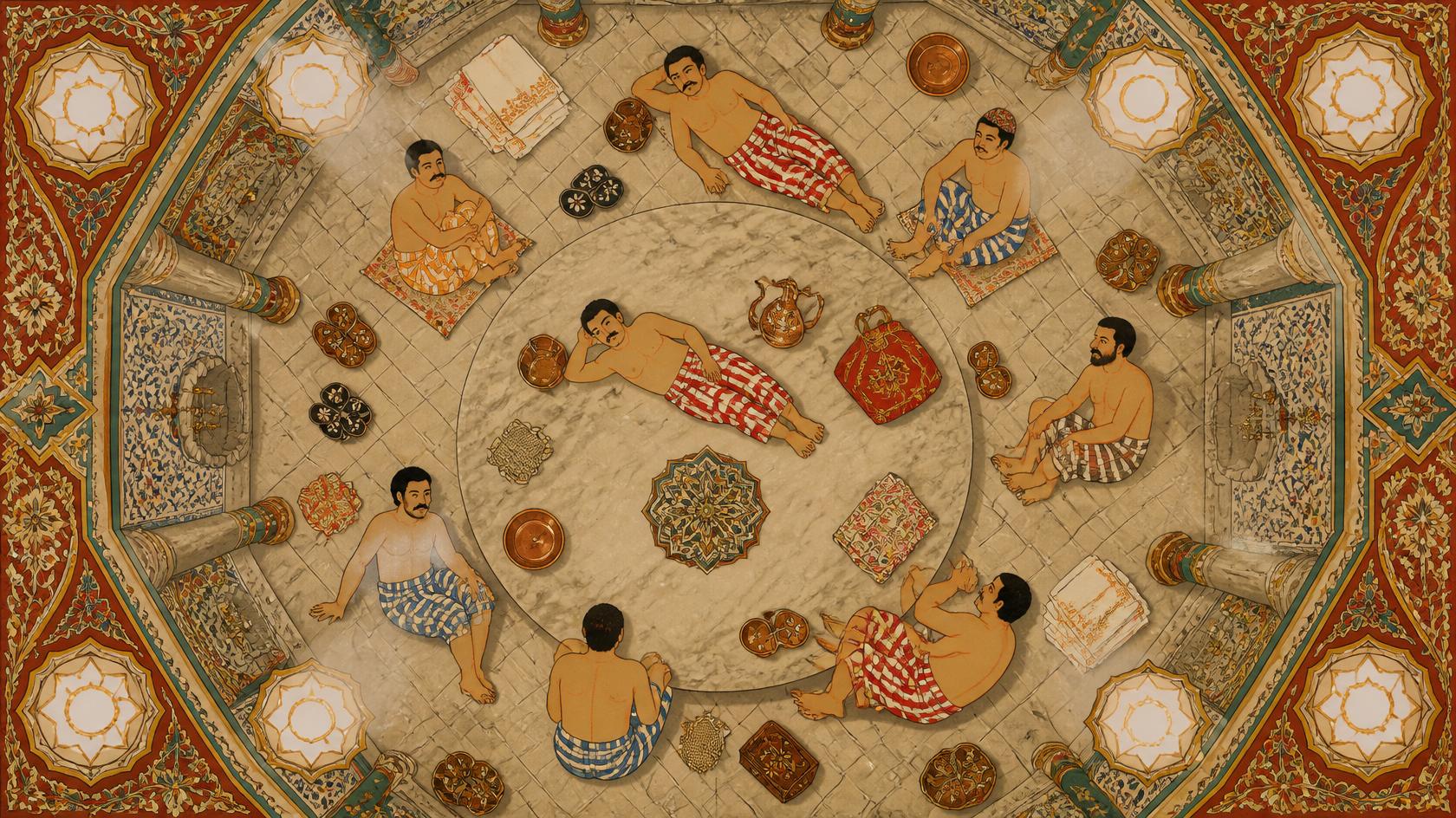
The Turkish people's deep-rooted appreciationof water, shaped over thousands of yearsand influenced by the culture of Anatolia as well as Islam, gave rise to the traditional Turkish bath (hamam) rituals. Along with thedevelopment of hamam culture, the need for various textile products emerged. During the Ottoman period, the quality of bath textiles and their decorative features reflected the social status of the families who attendedthe hamam. These bathing traditions became internationally recognized under the title of the "Turkish Bath." Decorative arts that spread from the Ottoman palace to the public were widely incorporated into hamam textiles. These textiles, produced for rituals such as bridaland groom baths, circumcision baths, andsoldiers' baths, were regarded as works of art.
One of the most important hamam textiles is the towel. Because of the loops on its fabric surface, it was originally called "havlı" (looped), a term that eventually evolved into the modernTurkish word "havlu" (towel). Its most significant characteristic is its ability to absorb water due to these loops, making it especially suitable for use in wet environments. Although towels generally have a looped weave, they have alsobeen woven without loops. They were often embellished with embroidery and were known by various names among the public, includingpeşkir, mezel, saçaklı, destimal, yağlık, çevre, mendil, makrama, gergah fişkiri, yağdan, yüz bezi, peştamal, üslük, and futa. Although these products were referred to by different regional names depending on their size andintended use, they all served similar purposes such as drying, wiping, and covering the body.
This study aims to examine Ottoman bath textiles recorded in historical sources in order to explain the place and significance of the Turkish towel in the history of textileproduction. In this context, document analysiswas conducted using archival records andmuseum collections as primary sources. Thestudy is important for revealing the relationships between historical processes and for addressing methodological aspects, thereby contributing to the existing body of knowledge in this field.
The study also examines the only surviving bath shirt preserved from the Ottoman palace, belonging to Sultan Murad IV (reigned 1623–1640), which is recorded in the Ottoman palace archives as a "hamam shirt." In addition, another important source on the history of the Turkish towel, entitled "One Hundred Years of the Royal Turkish Towel, 1851–1951," which documents the establishment of the Royal Turkish Towel Industry in England, has beeninvestigated. This source explains how theTurkish towel inspired the development of towel production technology throughout the world
Click here to read the full article.